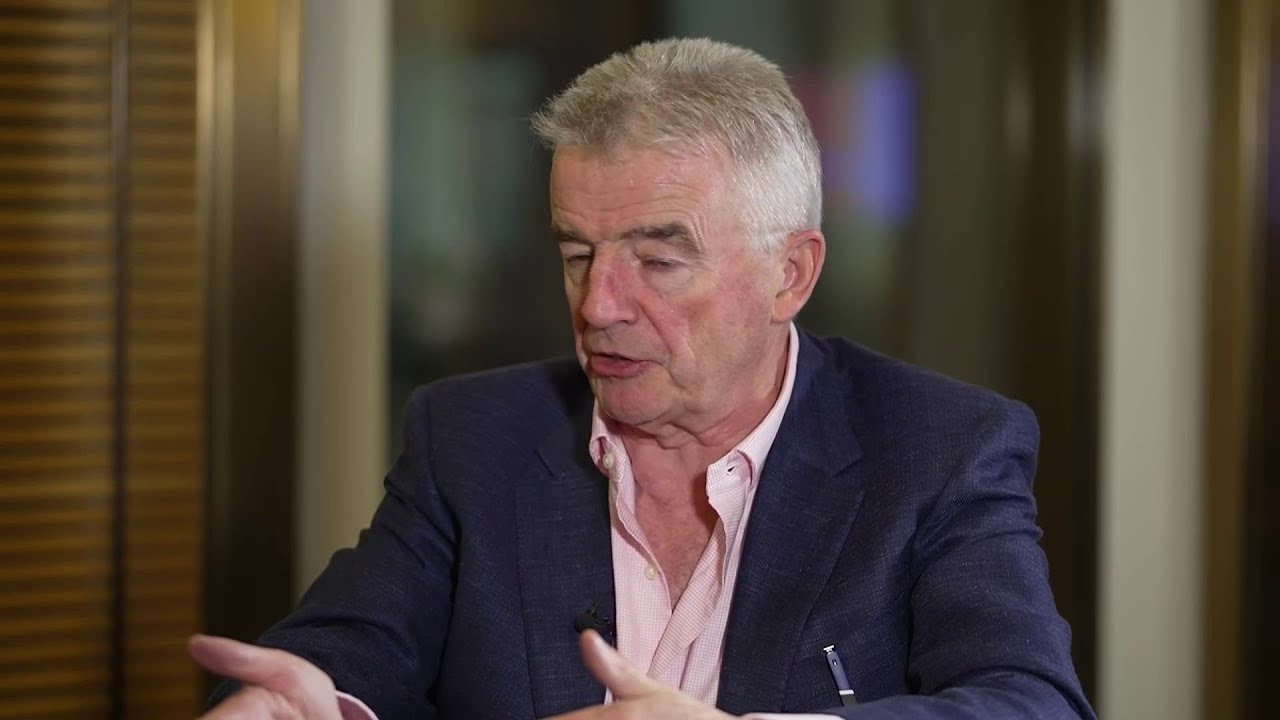
Ryanair chief executive Michael O'Leary has warned that a sustained jet fuel price near $150 a barrel will push at least one European airline into failure this summer, even as Europe's biggest budget carrier reassures its own customers that it will not pass on the cost.
Speaking to CNBC International, O'Leary said the price of Jet A1 has effectively doubled in less than two months as the Iran conflict has constrained supply through the Strait of Hormuz.
"Jet A1 was about $80 a barrel in March. It's now $150 a barrel," O'Leary said. "In Ryanair, we've hedged 80% of our jet fuel out to March 2027. So we are the best insulated, most hedged airline in Europe. And we can guarantee people there'll be no price increases, no fuel hedging, no fuel search levies, surcharges, regardless what happens this summer."

The supply story is more nuanced than the headlines suggest. O'Leary said the UK supply scare of three weeks ago has eased, and that the bulk of Europe's Jet A1 imports come from the United States, Norway, and West Africa, with the lifting of the Russian embargo improving fuel availability into Poland, Romania, and other Central European markets. Most Gulf-origin jet fuel flows to Asia.
"It is increasingly unlikely that there will be supply disruptions as long as nothing alters the flows of the supplies coming from West Africa, America, and Norway into Europe," O'Leary said.
Price, however, is doing the damage on its own. O'Leary was direct on the consequences if the current strip persists. "If pricing stays higher for longer this summer, we think a number of our airline competitors in Europe are going to face real financial difficulties," he said. "I think there will be failures if it continues at $150 a barrel into kind of July, August, September, then you'll see a European airline fail."

O'Leary also dismissed his Wizz Air counterpart's call to relax EU 261 passenger compensation rules, arguing the regime already covers fuel-shortage groundings as extraordinary circumstances. He used the same exchange to reopen his long-running fight with Brussels over European airline competitiveness, accusing Commission president Ursula von der Leyen of presiding over an environmental-tax regime that double-charges intra-Europe flights while exempting long-haul.
"If you really want to be competitive in Europe, we need to reduce ETS, bring it in line with CORSIA," O'Leary said, arguing alignment would lower European fares by 10 to 15%.
Ryanair's German base review is the other pressure point. The carrier is pulling out of Berlin Brandenburg over a 50% airport fee increase, and O'Leary signalled more German base closures are under active review. "The German aviation model is just completely dead," he said, citing tripled air-traffic-control fees, doubled security and passenger charges, and a 35% post-Covid traffic decline at Berlin.
For investors, Ryanair's hedge book is the standout asset. Eighty percent of jet fuel locked in to March 2027 means the carrier can hold fares while competitors are forced to raise them or retrench. If O'Leary's failure call is right, Ryanair emerges with the routes, the slots, and the demand that Europe's stretched second-tier carriers leave behind.