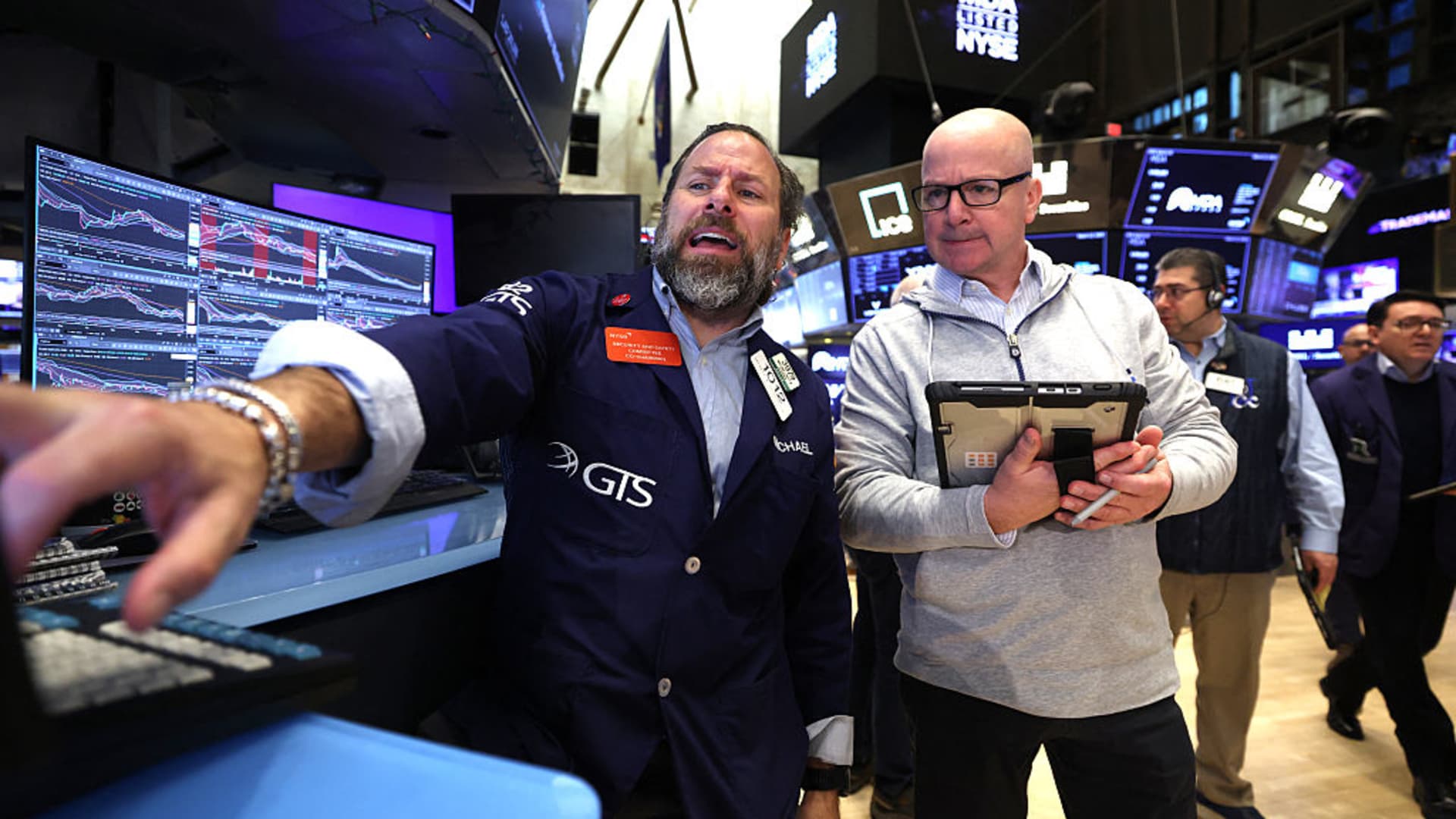
U.S. stocks suffered their worst session of 2026 on Thursday as escalating tensions in the Persian Gulf sent oil prices soaring and rattled financial markets worldwide.
The Dow Jones Industrial Average plummeted 739.42 points, or 1.56%, to close at 46,677.85, marking its first finish below 47,000 this year. The S&P 500 declined 1.52% to 6,672.62, while the Nasdaq Composite dropped 1.78% to 22,311.98. All three major indexes recorded their lowest closes of the year.
Crude oil prices continued their dramatic climb after Iran's newly appointed supreme leader made aggressive statements about the critical shipping route. Iran's new supreme leader, Mojtaba Khamenei, who was appointed on March 9, said that the Strait of Hormuz should remain closed as a "tool to pressure the enemy."


Looking Ahead
Looking Ahead

Looking Ahead
The market impact was immediate and severe. West Texas Intermediate futures surged 9.72% to settle at $95.73 per barrel, while Brent crude futures jumped 9.22% to $100.46 per barrel — the first close above $100 since August 2022.
U.S. officials acknowledged the challenging situation in the strategically vital waterway. Energy Secretary Chris Wright told CNBC Thursday that the U.S. Navy is "not ready" to escort oil tankers through the Strait, though he said it will likely be able to do so by the end of the month.
"not ready"


Championship Implications
The conflict has effectively paralyzed one of the world's most important shipping lanes. Traffic through the strait has practically reached a standstill as the Middle East conflict escalates, with three additional foreign vessels struck in the Persian Gulf overnight following Wednesday's attacks on three separate ships.
Market analysts viewed Iran's strategy as deliberate economic warfare. "Iran's strategy of sowing economic chaos in the Gulf is working as tankers come under attack and Hormuz stays shuttered, pushing Brent up toward $100," said Adam Crisafulli of Vital Knowledge in a note. "The U.S. and Israel have military dominance and Iran's missile/nuclear programs may be degraded, but Tehran's hardline [government] is firmly entrenched, and its plan now seems to be leveraging oil to push Trump further down an off-ramp."
"Iran's strategy of sowing economic chaos in the Gulf is working as tankers come under attack and Hormuz stays shuttered, pushing Brent up toward $100,"
U.S. forces responded militarily earlier this week, sinking 16 mine-laying Iranian ships near the Strait on Tuesday. Insurance company Chubb was announced as the lead underwriter for a U.S. government-led program to provide insurance to ships attempting to traverse the key passageway.
Governments moved quickly to address potential supply shortages. Wright announced late Wednesday that the U.S. will release 172 million barrels of oil from the Strategic Petroleum Reserve, though it will take about 120 days to deliver the fuel. The International Energy Agency also agreed to a coordinated release of 400 million barrels.
Despite these emergency measures, market strategists warned of broader economic implications. "If energy costs and gasoline prices remain at current levels or rise for a period due to developments in the Middle East, it may weigh on consumer sentiment and push affordability issues to the forefront as we get closer to the midterm elections," said Anthony Saglimbene, chief market strategist at Ameriprise.
Impact and Legacy
However, Saglimbene offered some reassurance about the underlying economy. "That said, overall consumer balance sheets remain in solid condition, income and employment conditions are currently sound, and inflation continues to ease in important pockets, namely shelter," he continued. "Over time, if inflation continues to ease (outside of temporary energy impacts) and markets and the economy hold on firm footing, Americans' attitudes about their ability to afford everyday life could improve."
"That said, overall consumer balance sheets remain in solid condition, income and employment conditions are currently sound, and inflation continues to ease in important pockets, namely shelter,"
President Donald Trump's earlier promise that the war will end "very soon" had briefly provided some market relief earlier this week, causing oil prices to retreat from previous highs above $100 per barrel.
Investors will be closely monitoring developments in the Persian Gulf and any signs of diplomatic progress, as the conflict's duration could determine whether current market volatility represents a temporary disruption or the beginning of a more sustained economic challenge.