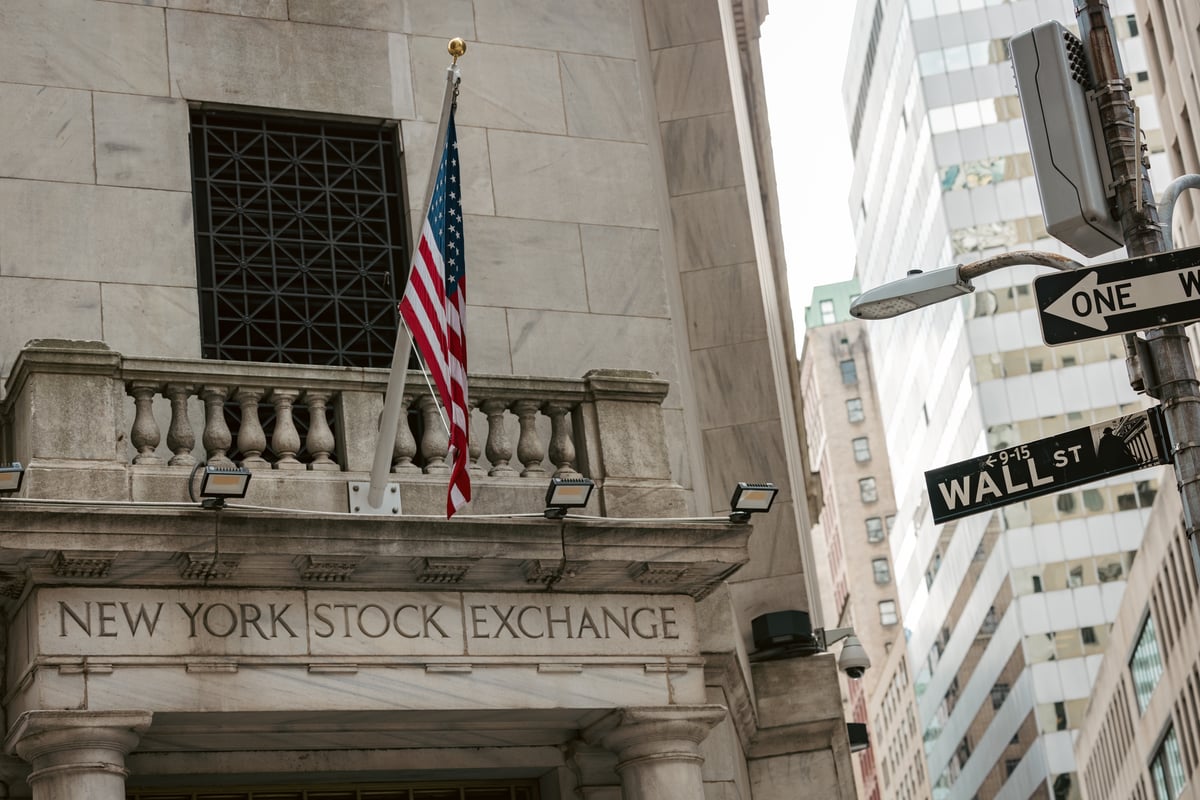
Wall Street's three-week losing streak deepened Thursday as the S&P 500 fell to its lowest level of 2026, weighed down by escalating tensions in the Middle East and surging oil prices.
The benchmark index closed down 0.6% at 6,632.19, while the Nasdaq Composite suffered the steepest decline, dropping 0.93% to 22,105.36. The Dow Jones Industrial Average fell 0.3% to 46,558.47.
Iran's blockade of the Strait of Hormuz has sent Brent crude oil futures soaring above $103 per barrel, raising concerns about potential supply disruptions and renewed inflationary pressures. The strategic waterway handles roughly one-fifth of global oil traffic, making any disruption a significant market concern.


Technology stocks bore the brunt of Thursday's selloff, with several major names posting notable declines. Meta Platforms led the retreat with a 3.8% drop to $614.10, while Microsoft fell 1.6% to $395.54 and Nvidia declined 1.6% to $180.25.


The energy sector's volatility comes as investors seek safe-haven assets amid the geopolitical uncertainty. Bitcoin managed to buck the broader market trend, rising 0.4% to $71,365.
Meanwhile, corporate developments continued to capture attention despite the market turbulence. Travis Kalanick, co-founder of Uber, emerged from relative obscurity to unveil Atoms, a robotics company that has operated in stealth mode for eight years.
Kalanick's venture represents a pivot from his previous CloudKitchens real estate business into what he describes as "gainfully employed robots" targeting transport, mining, and food industries. The move puts him in potential competition with his former company, as Uber previously sold its autonomous vehicle unit to Aurora Innovation.

"gainfully employed robots"
Elsewhere in the tech sector, Elon Musk announced a comprehensive restructuring of his AI company xAI "from the foundations up." The overhaul comes amid a wave of co-founder departures and hiring challenges at the company, which recently merged with SpaceX in a deal valuing both entities at $1.25 trillion.
By the Numbers
By the Numbers
By the Numbers
Race Results
Race Results
In retail news, BBB Foods posted strong fourth-quarter results, with the parent company of Tiendas 3B reporting 34% revenue growth. The performance was driven by a 16.6% surge in comparable store sales and a 21% increase in store count.
Looking Ahead
Looking ahead, investors will be closely monitoring developments in the Strait of Hormuz and any potential diplomatic efforts to resolve the standoff. The Federal Reserve's next policy moves will also be in focus, particularly if energy prices continue to climb and threaten the central bank's inflation targets.